Why Profits Don’t Always Mean Cash in the Bank
Have you ever had a strong month in sales, only to wonder why you still can’t make payroll?
This is more common than you think. Many business owners we work with run into this exact issue and it usually comes down to one thing: Understanding the difference between EBITDA and cash flow.
Key Takeaways:
- Profit doesn’t always mean cash in the bank
- EBITDA measures performance; cash flow determines survival
- Cash issues often come from timing—not lack of profit
- If you’re not tracking cash weekly, you’re flying blind
- Better cash visibility = better business decisions
What is EBITDA?
- EBITDA = Earnings Before Interest, Taxes, Depreciation, and Amortization
In plain English, it shows how well your business is performing based on what you sell and what it costs to run before factoring in loans, taxes, and things like wear and tear on your equipment..
What it shows you:
- Is the business profitable at its core?
- How does it compare to other businesses?
- What might it be worth?
In other words, EBITDA gives you a clear view of how well your business is performing at its core—without the noise of financing or accounting decisions.
It’s a useful way to understand profitability, but it’s only one part of the overall financial picture.
What is Cash Flow?
Cash flow is often the biggest source of stress for business owners – it directly impacts your ability to pay, invest, and grow.
Cash flow is the actual movement of money in and out of your business.
It answers the most important question: “Do I have enough cash to pay bills, staff and grow the business?“
Cash flow includes:
- Loan payments
- Equipment purchases
- Tax payments
- Timing of customer payments
- Inventory purchases
This is your day-to-day survival metric.
Strong cash flow means stability; weak cash flow creates pressure.
Why EBITDA and Cash Flow Tell Very Different Stories
Here’s where most business owners get caught off guard.
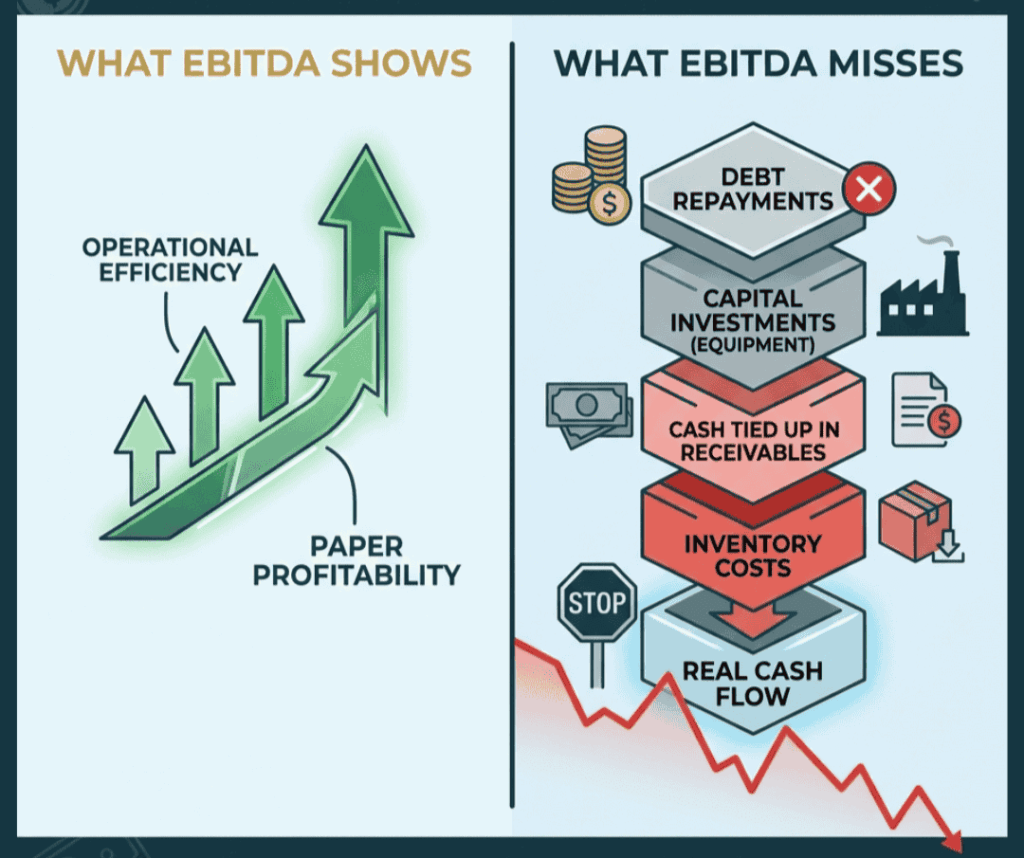
You can have strong EBITDA and still feel like you’re constantly short on cash. The reason is simple – EBITDA doesn’t account for the real cash demands of running a business.
For example, loan repayments still need to be made regardless of how profitable you are on paper.
Investing in equipment, vehicles, or software requires actual cash leaving your account. On top of that, if clients take time to pay, the revenue may be recorded but the cash isn’t in yet.
The same goes for inventory, where money is tied up in stock instead of being available to use.
The result? A business that looks profitable on paper, but feels tight and stressful in reality.
Which One Matters More for Your Business?
Both matter, but for different reasons:
EBITDA → Performance Metric
- Helps measure profitability
- Used in valuations (e.g., selling your business)
- Used by lenders and investors
Cash Flow → Survival & Growth Metric
- Determines if you can operate
- Impacts hiring decisions
- Affects your ability to scale
If you had to monitor one weekly: Cash flow wins. Every time.
That’s because profit is a snapshot but cash flow is real-time. It reflects the actual health of your business and drives the decisions that keep it running and growing.
How to Track EBITDA and Cash Flow (Without Overcomplicating It)
You don’t need complicated tools or systems to stay on top of your numbers. What matters most is being consistent and having a clear picture of what’s going on.
- Check your cash flow every week – not just once a month
Set aside 10–15 minutes each week to review what came in, what went out, and what’s left. You don’t need fancy software – a simple spreadsheet works fine. - Know when your clients are paying you
Late payments are one of the most common reasons cash feels tight even when business is good. Know who owes you, follow up consistently, and make your payment terms clear upfront. Asking for a deposit can also make a significant difference. - Plan ahead for large, predictable expenses
Things like tax payments, loan repayments, or buying equipment shouldn’t catch you off guard. Setting aside a small amount each month and having a basic plan can help you avoid surprises. - Understand how long it takes money to move through your business
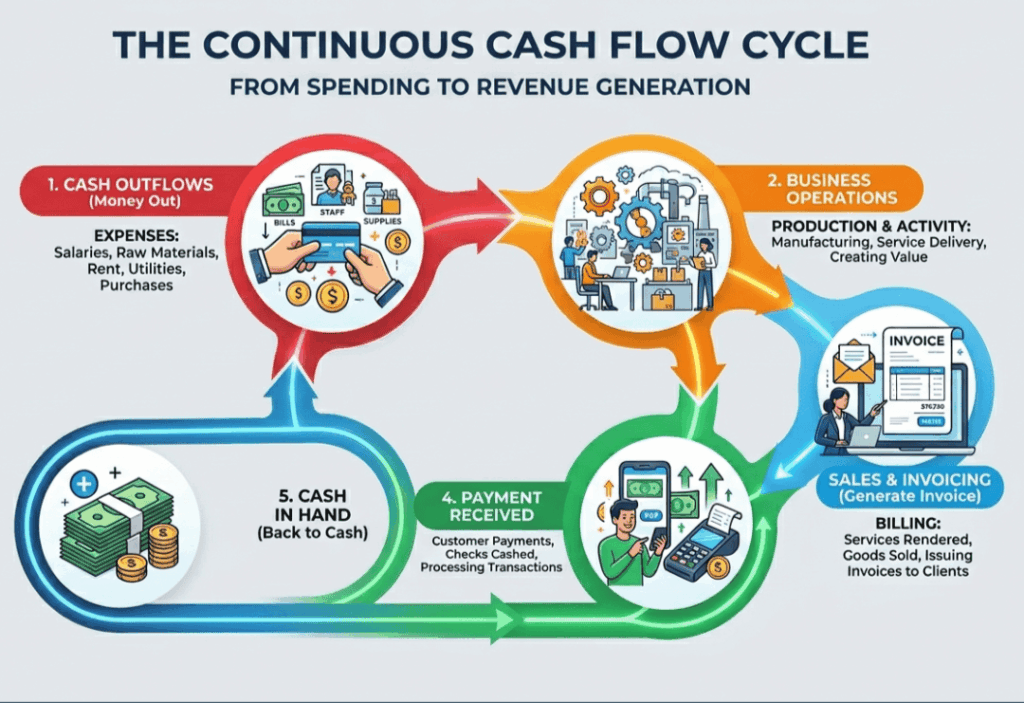
From the moment you spend on something to the moment a client pays you. That gap matters. The shorter it is, the healthier your cash position will be.
Get Clarity on Your Numbers
If you’re not sure where your business stands or why cash feels tight even when your numbers look strong – we can help.
At RMI LLP, we work with business owners across Calgary and Canada to give them a clear understanding of their financial position, improve visibility into their cash flow, and help them make confident, well-informed decisions for their business.
Book a consultation with us today or contact us at 403-457-4232 or info@rmillp.com.